Oil
Slowness and layeringThe most time-demanding technique: each glaze must dry before the next can be applied, sometimes over several days. This enforced slowness becomes a working method — thinking through the light before laying it down, building depth layer by layer rather than in a single gesture. It is also the medium of second thoughts: unlike watercolour, oil forgives hesitation, allows one to go back, to push a stubborn detail a little further.
This rigour I owe to the patient study of the Flemish masters — Pieter Claesz, Johannes Vermeer — and to a simple conviction: speed is not the virtue of this art. Painting is a journey, a micro-world one builds rather than executes.
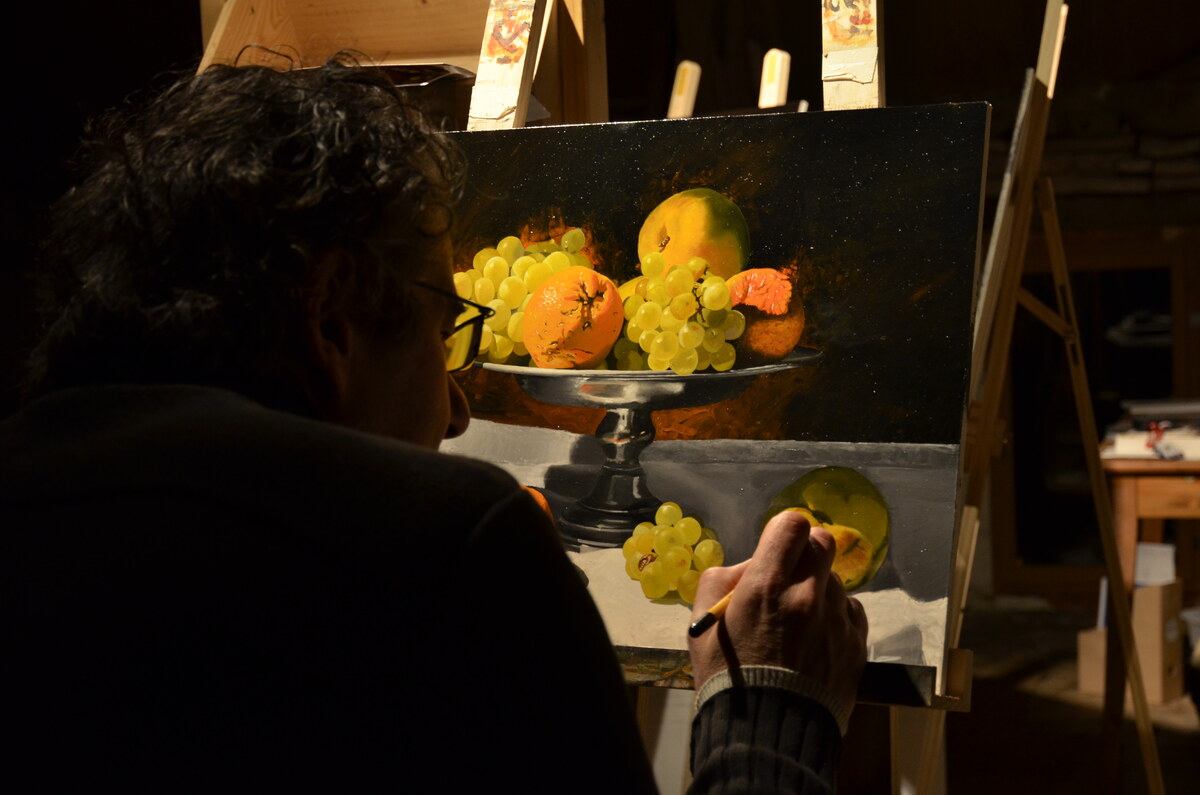
Support: wood, canvas and copper — Dutch technique: glazing
- Preparing a smooth support — the surface must be perfectly even to receive the precision of the drawing to come.
- Sketch — laying out the masses and the composition, before any colour.
- Grisaille — the values are laid in a single tone, to settle the construction of the light from the outset.
- Shadows and lights — colour, then successive glazes, drying after drying, until the desired depth is reached.
- Varnish — the final touch, in amber, which unifies the surface and gives it that sheen close to the old Dutch varnishes.
Watercolour
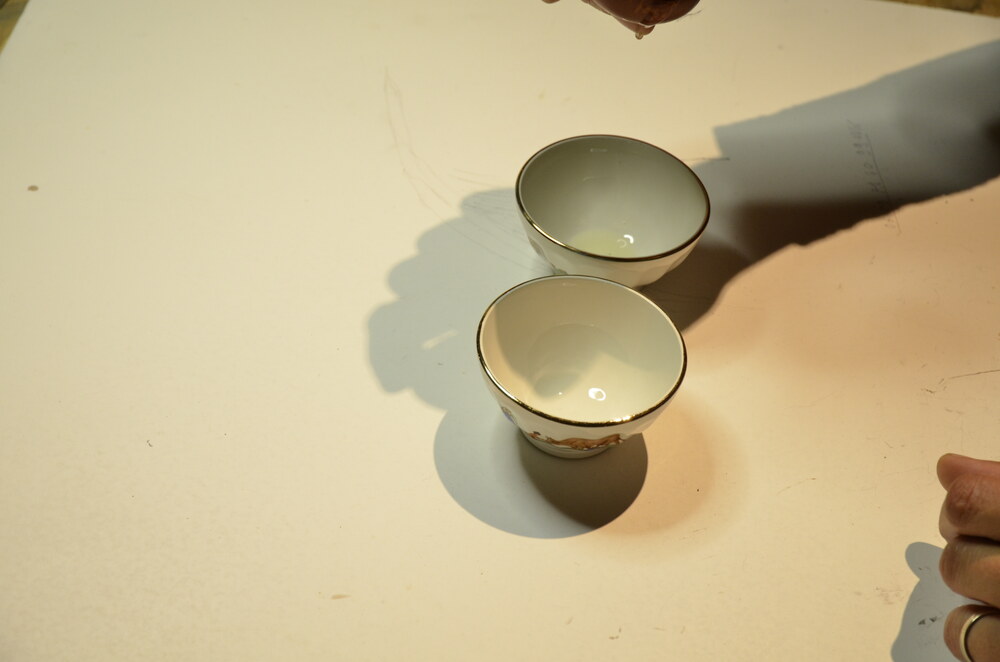
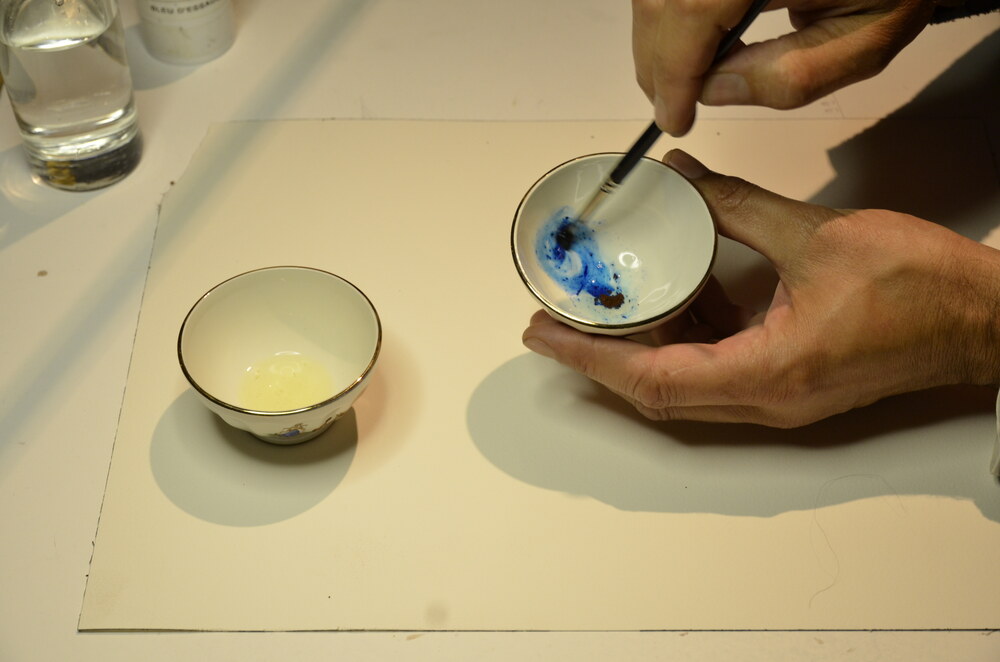
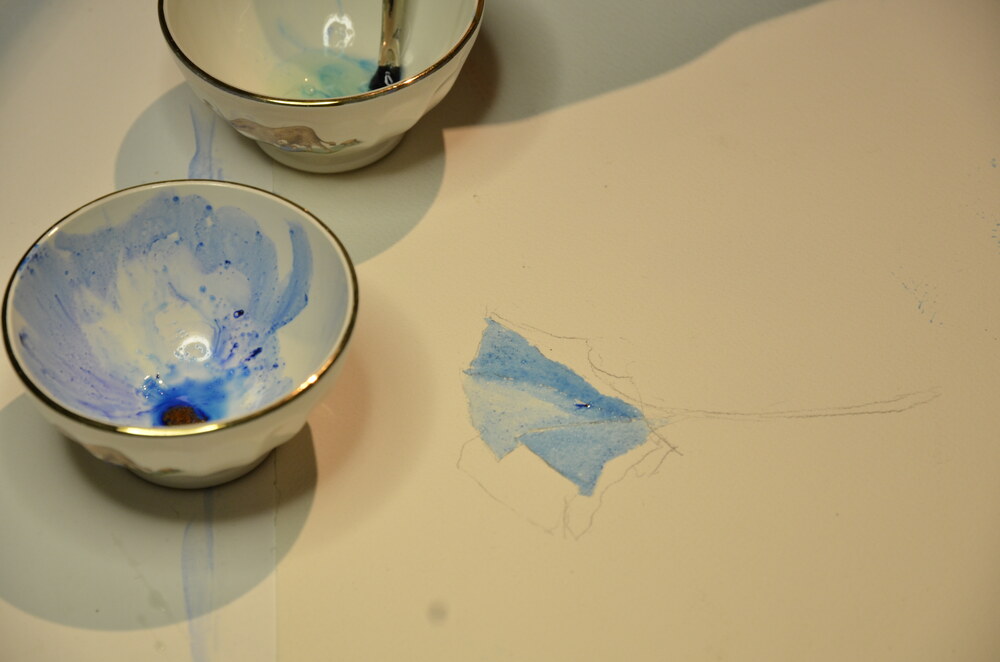
Transparency and immediacyUnlike oil, watercolour forgives no hesitation: one works from light to dark, reserving the white of the paper rather than painting it. It is a medium of the instant, where water itself takes part in the composition — unpredictable, never fully under control. The pigments are mixed directly with egg white, which acts as a binder and allows, as in oil, the layering of true glazes.
Acrylic
The "Finger Paint" seriesTwo gestures sit side by side here: for some paintings, the brush disappears completely — the colour is applied, pressed and spread directly with the fingers. For others, the brush resumes its usual place. Acrylic's fast drying time demands, in both cases, a bold and spontaneous gesture — and, in the finger-painted series, the material literally retains the imprint of the hand, in a painting more instinctive than deliberate.
Glazes — what I would call "transparent juices," also known as velatura, a light veil. They open a passage for light, letting the colour beneath show through while adding a tint of their own. Glazes are not meant for painting as such, being too thin in pigment; they unite and harmonise tones by giving them an overall hue.
It is through the choice of these colours, and the manner of glazing, that one manages to hold the shaded areas in darkness. Correggio was the first to discover this theory and put it fruitfully into practice.
It took me five years of maceration — Baltic amber, in a solution I keep secret — to obtain what I was looking for: a pure amber, clear as honey. The patience, here, was richly rewarded.
— Gilles Aguilera